
Can Concierge Nursing Help Manage a Chronic Illness Long-Term?
- Amani Health & Wellness
- August 16, 2026
- 9 min read
concierge nursing
Table of Contents
- 1. What Makes Chronic Illness Management So Difficult Long-Term
- 2. How Chronic Illness Nursing Care Fits Into Long-Term Management
- 3. What a Concierge Nurse Actually Does for Chronic Condition Management
- 4. Which Chronic Conditions Benefit Most
- 5. How Concierge Nursing Compares to Standard Follow-Up Care
- 6. Frequently Asked Questions
- 7. Making Long-Term Management Sustainable
If you or a loved one is living with a chronic condition, you already know that managing it is not a one-time event. It is an ongoing responsibility that touches medication schedules, symptom tracking, appointments, and daily decisions that add up over months and years. Chronic illness nursing care is designed to support exactly that kind of sustained management, rather than treating a health issue as something to resolve and move past. This article looks at what makes long-term chronic illness management so demanding, how concierge nursing fits into it, and which conditions tend to benefit most.
1. What Makes Chronic Illness Management So Difficult Long-Term
According to the Centers for Disease Control and Prevention, chronic diseases are defined as conditions lasting one year or more that require ongoing medical attention, limit daily activities, or both. That definition alone captures why these conditions are so demanding to manage: there is no finish line, and the responsibility for staying on top of them rarely lets up.
Several factors make chronic illness particularly hard to manage well over time:
- Multiple moving parts. Medications, follow-up appointments, lab work, and lifestyle adjustments all have to be tracked and coordinated at once.
- Gradual symptom changes. Small shifts in a condition can be easy to miss without consistent, close monitoring.
- Care fragmentation. Standard follow-up visits are often spaced weeks or months apart, leaving gaps where problems can develop unnoticed.
- Caregiver strain. Family members often take on informal coordination roles without the clinical training to catch warning signs early.
These challenges compound each other. A missed medication interaction, an unnoticed symptom change, or a delayed follow-up can each seem minor on their own but together increase the risk of a preventable hospitalization.
2. How Chronic Illness Nursing Care Fits Into Long-Term Management
Chronic illness nursing care through a concierge model is built around consistency rather than episodic visits. Instead of seeing a provider only when something goes wrong, patients receive regular, scheduled nursing support designed to catch small issues before they become large ones.
This approach typically includes:
- Recurring in-home visits scheduled at a frequency that matches the condition’s severity and stability
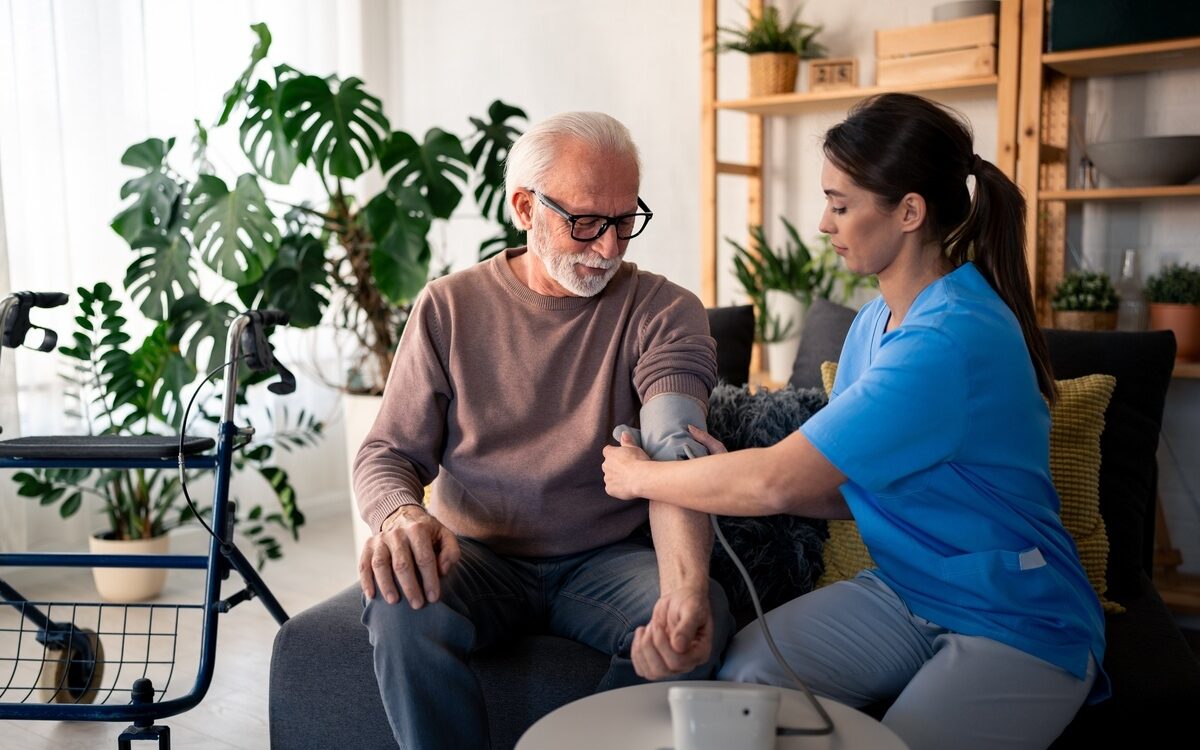
- Ongoing symptom and vital sign tracking that builds a clearer picture of trends over time, not just a single snapshot
- Direct communication with the patient’s physician so changes in condition are reported and addressed quickly
- A single point of contact who understands the patient’s full history, rather than a rotating cast of providers
For a broader look at what a concierge nursing visit generally involves, see our Concierge Nursing Services page.
3. What a Concierge Nurse Actually Does for Chronic Condition Management
The day-to-day work of this kind of care covers several distinct responsibilities, each aimed at keeping a long-term condition stable.
Medication Management
A concierge nurse reviews medication schedules, watches for interactions between multiple prescriptions, and helps patients stay consistent with dosing, which is one of the most common points of failure in chronic disease management.
Symptom Monitoring
Regular check-ins allow a nurse to track vital signs, weight changes, pain levels, or other condition-specific indicators, building a pattern that can flag a problem well before it becomes an emergency.
Care Coordination
Chronic conditions often involve multiple specialists. A concierge nurse can help bridge communication between them, making sure everyone involved in a patient’s care is working from the same current information.
Patient and Family Education
Understanding a condition well enough to manage it confidently at home reduces anxiety and improves adherence. A concierge nurse can walk patients and family members through what to watch for and when to escalate a concern.
Early Intervention
Because visits are frequent and consistent, a concierge nurse is often the first to notice a subtle change, whether that is a shift in energy, mobility, or mental clarity, that might otherwise go unaddressed until the next scheduled doctor’s appointment.
4. Which Chronic Conditions Benefit Most
While this kind of ongoing support can help with a wide range of conditions, some tend to benefit especially clearly from consistent, hands-on oversight:
- Diabetes, where blood sugar tracking and medication timing require daily consistency
- Congestive heart failure, where weight and symptom monitoring can catch fluid retention early
- COPD and other chronic respiratory conditions, where breathing changes need to be caught quickly
- Hypertension, where regular blood pressure checks help fine-tune treatment over time
- Chronic kidney disease, where lab trends and medication adjustments require careful tracking
- Post-stroke recovery and other neurological conditions, where functional changes benefit from close observation
Conditions involving multiple overlapping diagnoses, sometimes called multimorbidity, tend to benefit the most from this kind of coordinated, consistent support, since the complexity of managing several conditions at once is exactly where gaps in standard care tend to appear.
5. How Concierge Nursing Compares to Standard Follow-Up Care
Standard chronic disease follow-up typically means office visits scheduled weeks or months apart, with patients responsible for managing everything in between on their own. This model changes that structure by keeping a trained nurse involved on an ongoing basis rather than only at scheduled checkpoints.
According to a study published on the National Institutes of Health’s research database, structured post-discharge support for older adults with chronic conditions, including regular check-ins and coaching on self-management, has been associated with reduced hospital readmissions and fewer emergency department visits compared to standard discharge follow-up alone.
This does not mean concierge nursing replaces a physician’s role. Rather, it fills the space between appointments where most day-to-day management actually happens, and where problems are most likely to go unnoticed until they become serious. For families who have already explored what a guide to getting started looks like, our Concierge Nursing Services guide covers the practical steps involved.
6. Frequently Asked Questions
No. Concierge nursing can support chronic illness at any stage, including newly diagnosed conditions where establishing good management habits early makes a meaningful difference over time.
Visit frequency depends on the condition and how stable it currently is. Some patients benefit from weekly visits, while others may need only periodic check-ins with the option to increase frequency if their condition changes.
No. A concierge nurse works alongside your physician, providing more frequent monitoring and communication between visits rather than replacing the medical decisions your doctor makes.
Yes, and this is often where it provides the most value. Coordinating care across multiple conditions is exactly the kind of complexity that benefits from a single, consistent point of oversight.
No. While many chronic conditions become more common with age, this type of care can support adults of any age managing an ongoing health condition.
7. Making Long-Term Management Sustainable
Chronic illness is, by definition, something that does not resolve on its own timeline. What changes the long-term outlook is not a single treatment but the consistency of support behind it, catching small shifts early, keeping medications and appointments coordinated, and giving patients and families a clear point of contact when something feels off. That kind of steady oversight is difficult to maintain through standard, infrequent office visits alone.
Chronic illness nursing care is built to close that gap. Rather than waiting for the next scheduled appointment to catch a problem, ongoing in-home support means changes are noticed and addressed while they are still manageable, which is often the difference between a minor adjustment and a preventable hospitalization.
If you are in the Mansfield area, our Concierge Nursing Services in Mansfield, TX page has more on what ongoing support looks like locally.
Key Takeaways
- Chronic diseases require ongoing management with no fixed endpoint, which makes consistent support more valuable than occasional check-ins
- Chronic illness nursing care fills the gap between physician visits through recurring monitoring, medication management, and care coordination
- Conditions like diabetes, congestive heart failure, COPD, hypertension, and chronic kidney disease tend to benefit most from consistent oversight
- Patients managing multiple overlapping conditions often see the greatest benefit from coordinated, ongoing support
- Structured post-discharge support has been associated with reduced hospital readmissions compared to standard follow-up alone
- Concierge nursing works alongside a physician’s care rather than replacing it
WONDERING IF CHRONIC ILLNESS NURSING CARE IS RIGHT FOR YOUR FAMILY?
Every chronic condition looks different day to day. A conversation with a qualified provider can help clarify how frequently you might need support, what a typical visit would include, and how care would be coordinated with your existing physician.
Disclaimer: This article is for informational purposes only and is not a substitute for professional medical advice, diagnosis, or treatment. Always consult a qualified healthcare provider about managing a chronic condition.