How Is Concierge Nursing Different From a Home Health Aide?
- Amani Health & Wellness
- July 19, 2026
- 10 min read
Concierge Nursing Services
Table of Contents
- 1. Understanding the Two Roles and Why the Distinction Matters
- 2. What a Home Health Aide Does and Does Not Do
- 3. What In-Home Nursing Care Actually Involves
- 4. The Clinical Line Between the Two Roles
- 5. Which Situations Call for Each Type of Support
- 6. Frequently Asked Questions
- 7. Making the Right Choice for Your Situation
When families begin researching in-home support for a parent or spouse, the question of whether they need a home health aide or a nurse is often the first confusing decision they face. The two roles are frequently grouped under the broad label of in-home care, but they differ fundamentally in training and licensing. In-home nursing care and home health aide services are not interchangeable. Choosing the wrong type of support for a situation that requires clinical skill can have real consequences for the patient’s safety. This article explains both roles clearly, where the line between them falls, and how to determine which one fits the situation at hand.
1. Understanding the Two Roles and Why the Distinction Matters
The confusion between a home health aide and a licensed nurse is understandable. Both work in home settings and both support people who cannot fully manage their health or daily needs independently. Their training, licensing, scope of practice, and clinical authority are, however, entirely different. That difference determines what each can safely and appropriately do.
A home health aide is a non-clinical support worker whose role centers on personal care and practical daily assistance. A licensed nurse, whether a registered nurse or a nurse practitioner, is a clinical professional whose role centers on assessment, clinical judgment, and medical intervention.
The reason this distinction matters is directly tied to patient safety. A patient who needs wound care managed correctly or vital signs interpreted accurately needs a licensed nurse. A patient who needs help bathing, preparing meals, or getting to appointments needs a home health aide. Matching the right role to the right need is not a matter of preference. It is a matter of clinical appropriateness.
For a full overview of what in-home nursing care involves as a service, visit the Concierge Nursing Services page.
2. What a Home Health Aide Does and Does Not Do
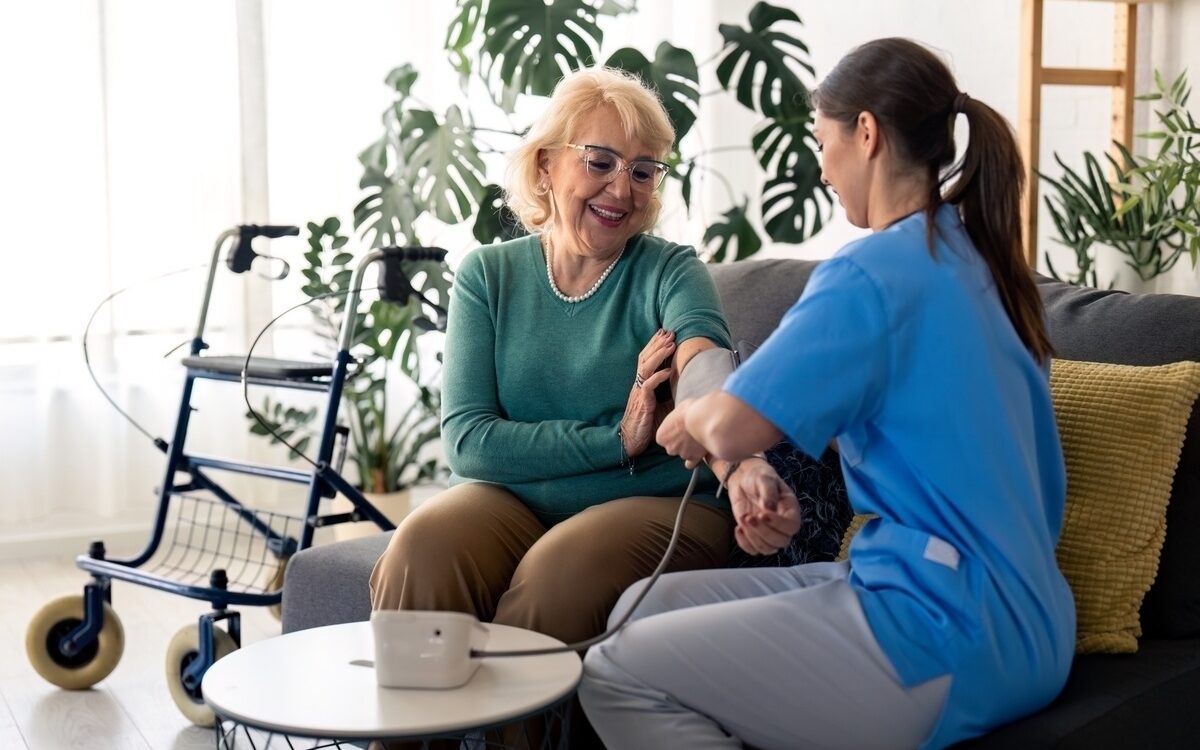
Home health aides provide non-clinical support to people who need assistance with daily activities. Their role is valuable and genuinely important for patients whose primary need is practical help rather than clinical care.
The core responsibilities of a home health aide typically include:
- Assisting with personal hygiene such as bathing, grooming, and dressing
- Helping with mobility including moving between rooms, getting in and out of bed, and using mobility aids
- Meal preparation and basic nutritional support
- Light housekeeping and laundry
- Companionship and social engagement
- Transportation to appointments or errands
- Medication reminders, which involve prompting a patient to take medication but not administering it or assessing its effects
According to the Bureau of Labor Statistics, home health aides may provide some basic health-related services such as checking a client’s pulse or temperature, and they do so under the direct supervision of a nurse or other healthcare practitioner. Personal care aides, the broader category that includes many home health aides, are generally limited to nonmedical services including companionship, cleaning, cooking, and transportation.
This supervised, non-clinical scope is important to understand. A home health aide is not trained or licensed to make clinical judgments. They cannot interpret symptoms, perform wound care independently, or assess whether a patient’s condition is changing in a medically significant way.
3. What In-Home Nursing Care Actually Involves
In-home nursing care brings licensed clinical professionals into the home. They perform the kinds of assessments, interventions, and monitoring that require a nursing license and formal clinical training. The defining difference between a nurse and an aide is not where they work but what they are qualified to do once they are there.
A licensed nurse providing in-home nursing care can perform the following:
- Clinical assessment — evaluating vital signs, respiratory function, cardiovascular status, skin integrity, and overall physiological condition, and interpreting what those findings mean for the patient’s care plan
- Wound care and dressing management — independently assessing wounds for signs of infection or poor healing, performing dressing changes using sterile technique, and managing drains or surgical sites
- Medication administration — administering medications including injections and IV infusions, reviewing medication schedules for accuracy, identifying potential drug interactions, and monitoring patients for adverse effects
- IV therapy — administering intravenous fluids, medications, or nutrients and monitoring the patient’s response throughout the infusion
- Chronic condition monitoring — tracking disease-specific indicators such as blood glucose levels, fluid balance, oxygen saturation, and cardiac rhythm, and communicating changes to the patient’s physician
- Clinical documentation — recording assessment findings in a format that can be shared with the patient’s broader healthcare team
- Care plan implementation — following and interpreting physician orders, adjusting care based on clinical findings, and escalating concerns when the situation warrants it
According to the American Nurses Association, scope of practice describes the services that a qualified health professional is deemed competent to perform in keeping with the terms of their professional license. Registered nurses and advanced practice registered nurses are authorized to exercise clinical judgment, perform independent assessment, and carry out medical intervention in home settings.
4. The Clinical Line Between the Two Roles
The clearest way to understand where the line falls is to look at what requires clinical judgment versus what requires practical assistance. That distinction defines the boundary between the two roles.
Clinical judgment involves interpreting information about a patient’s condition and making decisions based on that interpretation. Recognizing that a wound is infected requires clinical training to assess correctly. Determining whether a change in a patient’s breathing pattern is significant requires clinical knowledge to evaluate. These tasks cannot be delegated to a non-clinical worker regardless of their experience or dedication.
Practical assistance involves helping a patient accomplish tasks they cannot manage independently. It does not require clinical interpretation of what is happening in the patient’s body. Helping someone shower, preparing a nutritious meal, or providing transportation to a follow-up appointment are genuinely important forms of support, but they do not require nursing licensure to perform safely.
The situations where the distinction becomes critical include:
- A patient returning home after surgery who has drains, sutures, or a complex wound care protocol
- A patient with a chronic condition such as heart failure or diabetes whose status requires regular clinical monitoring
- A patient on multiple medications where interactions, side effects, or compliance issues require clinical oversight
- A patient whose condition is changing in ways that a family member or aide cannot reliably assess
- A patient who needs IV therapy or injections as part of their ongoing in-home nursing care
In each of these situations, sending a home health aide in place of a licensed nurse is not a cost-effective alternative. It is a clinical mismatch that puts the patient at real and preventable risk.
5. Which Situations Call for Each Type of Support
Understanding the distinction between the two roles makes the decision about which one to seek considerably more straightforward. The key question is not which option is more convenient or affordable. It is what the patient actually needs from the person coming into their home.
A home health aide is the right fit when:
- The patient’s primary needs are personal care and practical daily assistance
- There is no active wound, drain, or surgical site requiring clinical management
- Medications are stable and simply need to be taken on schedule with reminders
- The patient’s clinical status is stable and not expected to change in ways that require monitoring
- A licensed nurse has already assessed the patient and determined that non-clinical support is sufficient
- The patient is managing a well-controlled chronic condition not requiring active clinical intervention
In-home nursing care is the right fit when:
- The patient has recently been discharged from a hospital or surgical facility and requires clinical oversight during recovery
- There are wounds, drains, IV lines, or other clinical elements that require professional management
- The patient is on a complex medication regimen where errors, interactions, or side effects need clinical monitoring
- Vital signs, symptom patterns, or disease-specific indicators need to be assessed by a clinically trained professional
- The patient or family needs someone who can communicate directly with the patient’s physician and make observations that inform ongoing care decisions
- There is uncertainty about whether the patient’s condition is stable or changing in ways that warrant escalation
According to the National Institute on Aging, planning for home-based care requires carefully considering what kinds of help are needed now and what might be necessary in the future. The goal is matching the level of support to the individual’s actual health situation and safety needs.
To understand how in-home nursing care applies specifically to recovery situations, read Can Concierge Nursing Help With Post-Surgical Recovery at Home?
6. Frequently Asked Questions
Yes, and this is often the most practical arrangement for patients with both clinical and non-clinical needs. A licensed nurse handles assessments, wound care, medication management, and clinical monitoring during scheduled visits. A home health aide provides daily personal care and practical assistance between those visits. The two roles complement each other rather than compete, and clear communication between both workers supports better continuity of care.
The clearest signal is whether the care required involves clinical judgment. If someone needs help with bathing, meals, and getting around the house, a home health aide is appropriate. If someone needs wound care assessed, medications managed clinically, or vital signs interpreted by a trained professional, they need a licensed nurse. When in doubt, a brief consultation with the patient’s physician or discharge team can clarify what level of care is genuinely needed.
No. In-home nursing care serves a wide range of patients, from those recovering from elective procedures to people managing well-controlled chronic conditions who benefit from periodic clinical oversight. It is also used proactively by people who want regular wellness assessments or lab draws without the inconvenience of clinic visits. The service is defined by the need for clinical skill, not by the severity of the patient’s illness.
A concierge nurse is a licensed registered nurse or nurse practitioner who has completed a nursing degree, passed national licensing examinations, and maintains an active clinical license. A home health aide typically requires a high school diploma and completion of a basic training program that does not include clinical education for independent assessment or medical intervention. The educational difference between the two roles directly reflects the difference in what each is permitted and qualified to do.
In most cases, no. Home health aides are not licensed to perform clinical procedures independently. Depending on the state, a home health aide working under direct nursing supervision may assist with certain basic tasks. However, independently assessing a wound for infection, changing a surgical dressing using sterile technique, or administering an injection falls outside their scope of practice and requires a licensed nurse.
If a home health aide is present when a patient’s condition changes, they are required to report the change to a supervising nurse or case manager rather than assess or respond clinically. A licensed nurse providing in-home nursing care, by contrast, can assess the change, determine its clinical significance, adjust care accordingly, and contact the patient’s physician if escalation is needed. This capacity for immediate clinical response is one of the most important practical differences between the two roles.
7. Making the Right Choice for Your Situation
The difference between in-home nursing care and a home health aide is not a matter of degree. It is a matter of kind. One role provides practical support for daily living. The other provides clinical care that requires licensure, training, and the legal authority to assess, treat, and make healthcare decisions.
Both roles have genuine value and serve important purposes. The problem arises only when one is substituted for the other in a situation where the clinical distinction matters. For families navigating in-home care decisions, the most reliable approach is to start with an honest assessment of what the patient actually needs.
If that need involves clinical skill, in-home nursing care is the appropriate response rather than a more convenient alternative. If that need is primarily practical, a home health aide provides exactly the right level of support. Understanding this distinction does not make the decision harder. It makes it clearer, and it puts the patient’s health and safety at the center of the choice where they belong.
To learn more about what in-home nursing care involves and how it is structured as a service, visit the Concierge Nursing Services in Mansfield, TX page.
Key Takeaways
- Home health aides provide non-clinical support including personal care, meal preparation, companionship, and transportation — they are not licensed to perform clinical procedures independently
- In-home nursing care is delivered by licensed registered nurses or nurse practitioners who are trained and legally authorized to assess, treat, and monitor patients clinically
- The core distinction between the two roles is clinical judgment — tasks that require interpreting a patient’s health status and making care decisions require a licensed nurse
- Common situations requiring in-home nursing care include post-surgical recovery, complex wound management, IV therapy, medication oversight, and chronic condition monitoring
- Home health aides and licensed nurses can work together for the same patient, with each role covering the type of support they are qualified to provide
- Choosing a home health aide when the patient’s situation requires clinical nursing care is not a cost-saving decision — it is a clinical mismatch that creates patient safety risk
- The right question when choosing between the two is not which is more convenient or affordable, but what the patient’s actual health situation requires from the person providing care
EXPLORING IN-HOME CARE OPTIONS AND WANT TO UNDERSTAND THE DIFFERENCE?
Knowing whether a situation calls for clinical nursing support or practical daily assistance is the first step toward arranging care that genuinely fits the patient’s needs. A conversation with a qualified nursing provider can clarify what the patient’s specific situation requires and what structured in-home nursing care involves from visit to visit.
Disclaimer: This article is intended for educational purposes only and does not constitute medical advice. Decisions about the appropriate level of in-home care should be made in consultation with the patient’s physician or healthcare team based on the individual’s specific health needs and circumstances.
References
- Bureau of Labor Statistics. Home Health and Personal Care Aides: Occupational Outlook Handbook. https://www.bls.gov/ooh/healthcare/home-health-aides-and-personal-care-aides.htm
- National Institute on Aging. Aging in Place: Growing Older at Home. https://www.nia.nih.gov/health/aging-place/aging-place-growing-older-home
- American Nurses Association. Nursing Scope of Practice. https://www.nursingworld.org/practice-policy/scope-of-practice/